Moving to Spain is a long-term decision that can significantly improve quality of life for the right people. The country offers a warm climate, a slower pace of life, strong healthcare, and a culture that prioritises social connection and outdoor living. However, relocating to Spain also involves administrative challenges, cultural adjustment, and financial planning that are often underestimated.
This guide explains the reality of moving to Spain, highlighting both the advantages and the practical considerations that should be understood before making the move.
- Why People Choose to Move to Spain
- Climate and Health Benefits
- Lifestyle Differences: Living Versus Holidaying
- Housing Quality and Practical Considerations
- Bureaucracy and Administration
- Financial and Regulatory Awareness
- Community, Language, and Integration
- Employment and Income Planning
- Who Spain May Not Be Suitable For
- Is Moving to Spain Worth It?
Why People Choose to Move to Spain
Spain attracts international residents for a combination of lifestyle, health, and financial reasons.
Key motivations include:
- A warm Mediterranean climate with high levels of annual sunshine
- An outdoor-focused lifestyle that encourages walking, socialising, and physical activity
- A strong public healthcare system supported by affordable private options
- Lower day-to-day living costs in many regions compared to Northern Europe
- Well-connected international airports and transport networks
- Established international communities, particularly along the coast
For many people, these factors contribute to improved wellbeing and a better work-life balance.
Climate and Health Benefits
One of the most significant differences between Spain and Northern European countries is the climate.
Spain’s warmer temperatures and higher sunlight exposure can have positive effects on physical and mental health. Many residents report improvements in conditions such as joint pain, back problems, and seasonal mood disorders. The climate also supports a more active lifestyle, with walking, cycling, and outdoor social activities forming part of daily life.
The Mediterranean diet, which emphasises fresh fruit, vegetables, fish, olive oil, and home-prepared meals, is also widely recognised for its health benefits.
Lifestyle Differences: Living Versus Holidaying
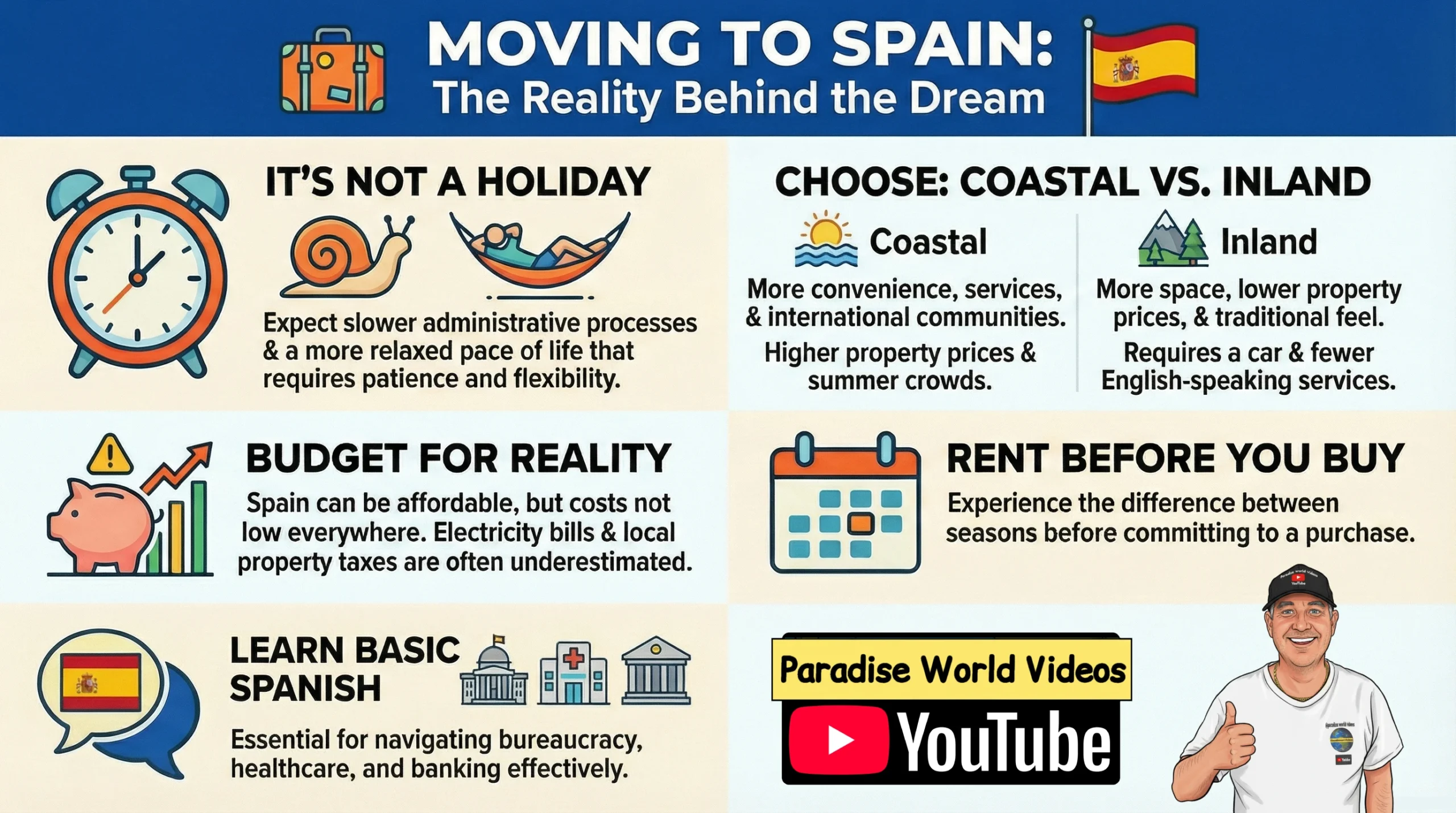
A common misconception is assuming that living in Spain feels the same as being on holiday. In reality, daily life follows a different rhythm.
Key lifestyle adjustments include:
- Slower administrative processes and longer timelines
- More relaxed attitudes to timekeeping and deadlines
- A stronger emphasis on community and social interaction
- Seasonal changes in activity levels, particularly in coastal areas
While many people find this pace refreshing, it requires patience and flexibility, especially during the first year.
Housing Quality and Practical Considerations
Housing standards in Spain differ from those in some Northern European countries.
Important factors to be aware of:
- Older properties may have limited insulation
- Sound insulation can be poor in some apartment buildings
- Orientation matters, with south-facing properties generally offering better year-round comfort
- Heating systems are often electric rather than gas-based
Understanding these differences before buying or renting can help avoid discomfort and unexpected costs.
Bureaucracy and Administration
Spanish bureaucracy is one of the most challenging aspects for new residents.
Common administrative requirements include:
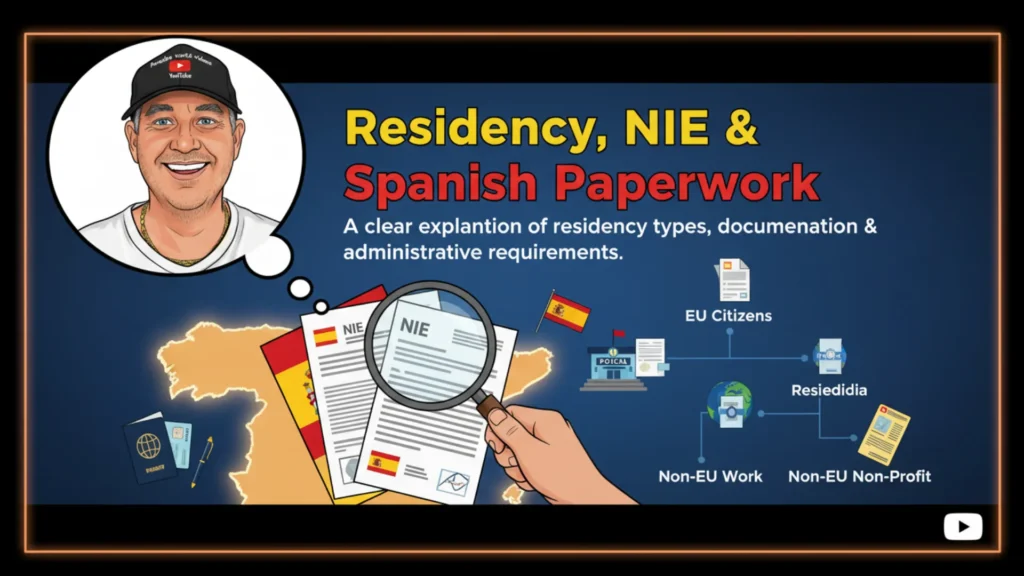
- Obtaining a NIE (foreigner identification number)
- Registering residency
- Opening a Spanish bank account
- Registering with the local town hall (padrón)
- Arranging healthcare coverage
Processes can be slow, and requirements may vary by region. Delays are common, and rules may change with limited notice. Many people choose to work with a gestor or solicitor to reduce errors and delays.
Financial and Regulatory Awareness
Spain has increasingly strict financial compliance requirements.
Key points to understand:
- Banks apply rigorous identity and source-of-funds checks
- Larger transfers may need to be declared
- Documentation should be retained for several years
- Both Spanish and foreign accounts may be subject to reporting requirements
Being organised and transparent with financial records is essential to avoid complications.
Community, Language, and Integration
Spain is generally welcoming to international residents, particularly in regions with established expat populations.
While fluency in Spanish is not essential in all areas, basic language skills are strongly recommended. Spanish is often required for:
- Dealing with banks
- Communicating with government offices
- Healthcare administration
- Resolving legal or property-related matters
Successful long-term residents tend to balance international social circles with local engagement.
Employment and Income Planning
Employment opportunities in Spain vary significantly by sector and region.
Considerations include:
- Lower average wages compared to Northern Europe
- Language requirements for many roles
- Administrative obligations for self-employment
- Tax residency implications
Many people moving to Spain rely on pensions, savings, remote work, or independent income sources. Having a realistic income plan before relocating is critical.
Who Spain May Not Be Suitable For
Spain may not be the right choice for everyone.
It can be challenging for individuals who:
- Require fast and predictable administrative systems
- Are unwilling to adapt to cultural differences
- Expect low-cost property in premium coastal locations
- Do not have a clear financial plan
- Are uncomfortable with regulatory complexity
Being honest about expectations can prevent costly mistakes.
Is Moving to Spain Worth It?
For many people, Spain offers a high quality of life, particularly when expectations are realistic and preparation is thorough.
Those who adapt best typically:
- Research carefully before relocating
- Rent before buying property
- Understand administrative requirements
- Learn basic Spanish
- Budget conservatively
- Remain flexible during the transition period
Moving to Spain is not an escape from responsibilities, but a change in lifestyle that rewards preparation and adaptability.