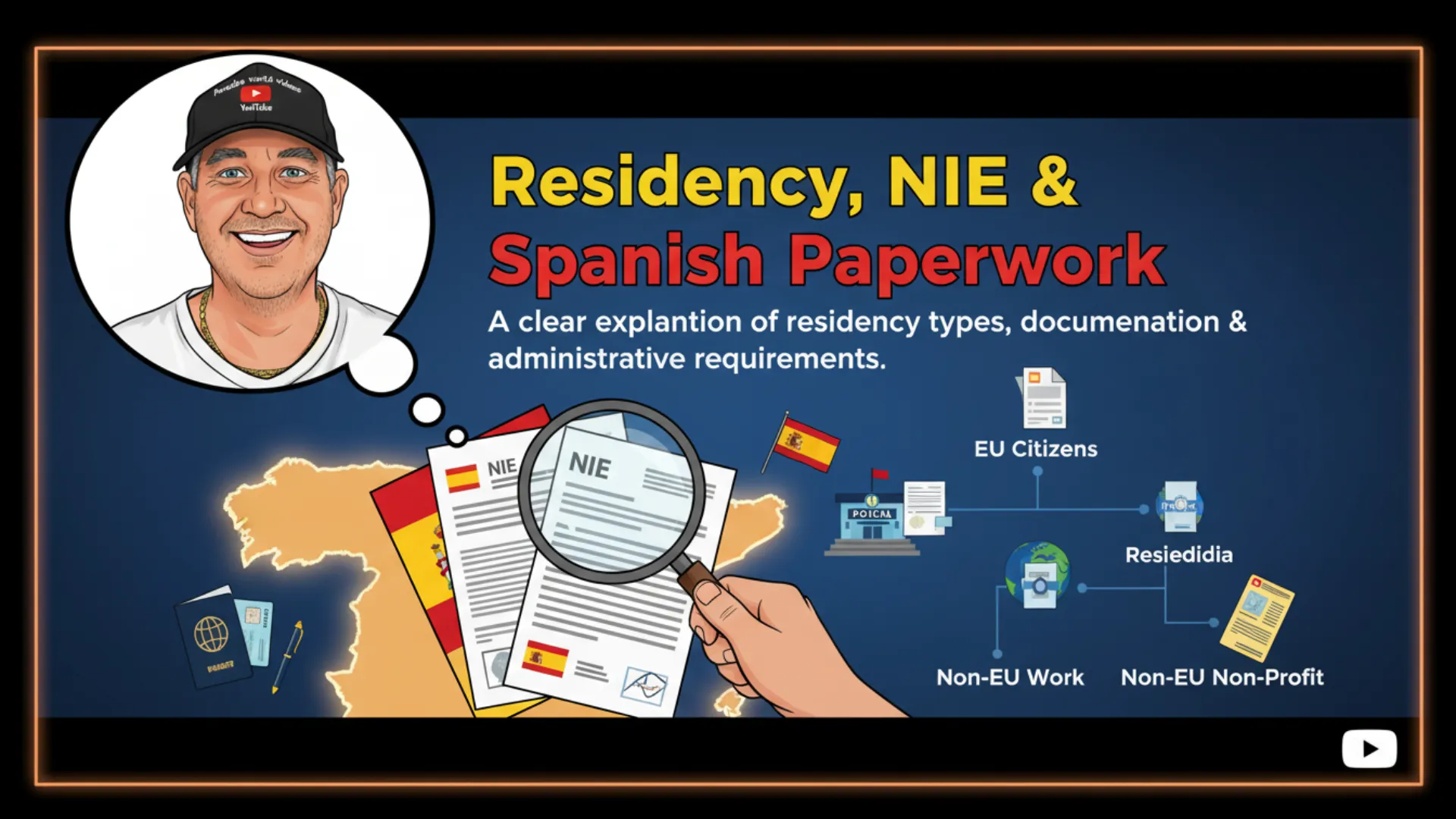
Relocating to Spain involves a number of administrative requirements that can appear complex at first. Understanding what each document is, why it is required, and how the process works makes the transition far more manageable.
This guide explains the key paperwork most foreign residents need when living in Spain, including residency, NIE numbers, local registration, banking requirements, and healthcare.
The NIE Number Explained
The NIE (Número de Identidad de Extranjero) is a personal identification number issued to foreign nationals in Spain.
It is required for:
- Buying or selling property
- Opening a Spanish bank account
- Paying taxes
- Working or registering as self-employed
- Purchasing vehicles or utilities
- Signing legal contracts
The NIE is permanent and does not expire. However, it does not grant residency status on its own.
Residency in Spain
Residency determines your legal right to live in Spain long term. The type of residency required depends on nationality, income, and employment status.
Common Residency Categories
- Employed residency – for those working for a Spanish employer
- Self-employed residency – for those operating as autónomos
- Non-lucrative residency – for individuals with sufficient independent income
- Digital nomad residency – for remote workers meeting specific criteria
- Pensioner residency – for retirees meeting income and healthcare requirements
Each category has specific documentation requirements and financial thresholds.
Financial and Income Requirements
Most residency applications require proof of:
- Stable income or savings
- Health insurance coverage
- A Spanish address
- Valid identification
- NIE number
Income thresholds vary and are periodically updated. Applicants should verify current requirements before submitting an application.
The Padrón Registration
The padrón is registration with your local town hall (ayuntamiento) confirming where you live.
It is required for:
- Accessing public healthcare
- Enrolling in local services
- Certain residency applications
- School registration
- Municipal benefits
Residents should update their padrón if they move to a new address.
Spanish Bank Accounts and Financial Compliance
Opening and maintaining a Spanish bank account is essential for most residents.
What Banks Typically Require
- Passport
- NIE or residency card
- Proof of address
- Proof of income or funds
- Tax identification details
Banks apply strict compliance checks, particularly regarding the source of funds.
Financial Reporting Obligations
Spain operates under stringent anti-money-laundering and tax reporting rules.
Key points include:
- Large transfers may require advance declaration
- Documentation should be retained for several years
- Both Spanish and foreign accounts may be reportable
- Digital banking platforms are subject to the same regulations
Failure to comply can result in account restrictions or penalties.
Healthcare Registration in Spain
Healthcare access depends on residency and employment status.
Public Healthcare
Available to:
- Employed residents
- Self-employed residents
- Pensioners who meet eligibility criteria
Public healthcare provides comprehensive coverage with subsidised prescription costs.
Private Healthcare
Private insurance is commonly used:
- During initial residency applications
- By non-working residents
- As a supplement to public care
Private policies vary by provider, age, and coverage level.
Common Delays and Administrative Challenges
Administrative delays are common, particularly in high-demand regions.
Typical challenges include:
- Limited appointment availability
- Regional interpretation differences
- Changing documentation requirements
- Processing backlogs
Professional assistance can help reduce errors and delays.
Using a Gestor or Legal Representative
Many residents choose to work with a gestor or solicitor to manage paperwork.
Benefits include:
- Familiarity with current regulations
- Spanish language support
- Reduced administrative burden
- Improved processing accuracy
While not mandatory, professional assistance can simplify the process.
Ongoing Responsibilities
Once resident, individuals are responsible for:
- Filing tax declarations where applicable
- Maintaining valid healthcare coverage
- Updating address registrations
- Complying with residency renewal requirements
Staying organised reduces long-term issues.